
Has your Mac computer been running into issues lately? It might be time to give it a fresh OS (operating system) installation. This process is actually straightforward and simple. Here's how to reinstall your Mac operating system(OS).
Warning: Make sure you do a full backup of your files before you reinstall your operating system.
- Once the system has been reinstalled, you will have to begin the tedious process of putting things back to the way they were. This will include: Switching on the Firewall. Switching on FileVault. Re-encrypting the startup disk. Reinstalling your apps. Bringing essential files back onto the computer from your backups. Adding a screen lock PIN code.
- Back your Mac up before starting the process (just a reminder). Look at the top-left corner of the window and press the Apple icon. From the menu, you will see, select Restart. Step 2 - Select Reinstall macOS from Utilities Window.
How to Reinstall Mac OS Using Recovery Mode
Using the Recovery Mode is an easy way to reinstall your Mac OS. Follow the steps below to get a new version of your operating system:
First, you download OS X Recovery Disk Assistant v1.0from apple, then create a recovery usb drive, then plug in the usb into your mac. Toast titanium mac cracked. When it power on, press option to select use the recovery disk you just made. You will found you can reinstall a OS x 10.10. Reinstalling OS X System Software on a Mac with Recovery Mode Reboot the Mac and hold down the Command+R keys until you see the loading screen to signify you are entering into System. When you see the OS X 'Utilities' menu, you should connect the Mac to the internet however you normally do – this. https://herezload172.weebly.com/flinto-24-2.html. Reinstall Mac OS At times, you might find the need to reinstall your current MacOS system. While this is mostly used as a troubleshooting technique, there are many more reasons for reinstalling a High Sierra operating system. A clean install erases files from your mac, but a reinstall does not delete anything.
Note: Your Mac needs to be connected to the internet to install or reinstall macOS. Move files from mac to pc.
- Restart your Mac. You can do this by holding down the power button or by clicking the Apple logo by the top left corner of the screen and selecting Restart.
- As your computer is restarting, hold down the Command + R keys. Keep holding them down until you see the Apple logo appear on your screen. When the Apple logo appears, release the command and R keys.
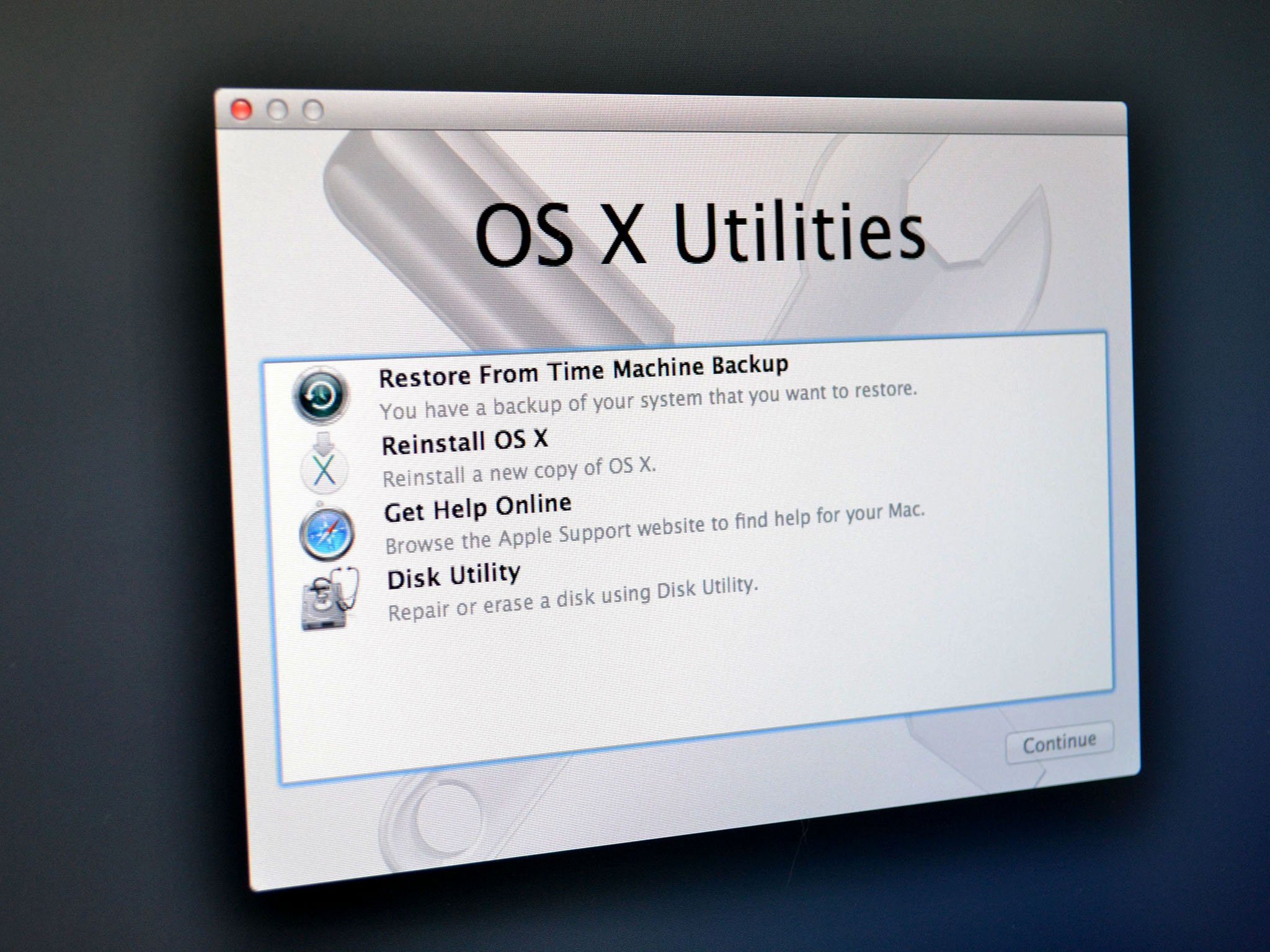
- When you are in recovery mode, click Reinstall macOS and then click continue.
- When the installer window pops up, click Continue. You will be shown the terms and conditions for installing the OS. Click Agree and then select your hard drive in the next window. Click Install to initiate the process.
How to Install macOS By Wiping Hard Drive First
If you wish to do a clean installation of yourMac operating system, you will need to wipe the internal hard drive first. You shoulddo this if you are selling your device or giving it to someone else touse.
- Restart your Mac.
- While your computer is restarting, press and holding the Command + R keys.
- Click Disc Utility and then click continue.
- Click View > Show All Devices.
- Select your Mac's drive and then click Erase. This will be the highest option in the device tree.
- Click Erase and fill in the name, format, and Scheme.
- Name: You can choose any name you want, but it's recommended to name the disk something generic.
- Format: You can choose either APFS (Apple File System) or macOS Extended (Journaled). The Disk Utility will show the compatible format by default. Most older computers will be Journaled, while most modern laptops that come with solid-state drives (SSD) are APFS-formatted.
- Scheme: Choose GUID Partition Map
- Select Erase by the bottom right corner of the screen. This step will start the process of wiping your Mac's hard drive. This process will take a few hours, so make sure that your Mac is plugged in. When prompted, click Done.
- Once your data is wiped, you can then start the reinstallation process. If you are in the functioning recovery partition when you booted, you will see the Reinstall macOS option. Click the button, and the process will start.
This step will take a little while. When theprocess is complete, your Mac will restart. You can then create a new account.Skip creating a new account if you are selling or giving away your device.Leave that step to the new owner.
Installing a fresh copy or reinstalling the operating of your Mac is an easy process, as long as you are connected to the internet and your computer is plugged into a power source.
If you are having a problem with a specific application, you can learn how to uninstall programs from your Mac here.
Updated on January 29, 2020
Was this article helpful?
Sep 28, 2020 • Filed to: Solve Mac Problems • Proven solutions
'Is it possible to reinstall macOS without losing data?'
If you have a similar question in mind, then we have got you covered. Just like any other computer, Mac systems can also suffer from unwanted issues at times.
In this guide, we will teach you how to boot Mac into recovery mode and reinstall macOS without losing your data. Let's explore this macOS solution in detail. Youtube video mp4 converter free download mac.
Reinstall Mac Os X From Usb
When to reinstall macOS?
There are all kinds of reasons for us to reinstall macOS on the system. The following are some of the common problems that force a complete reset on a Mac.
- Firmware issues – Mostly, a firmware issue related to macOS demands a reinstallation of the operating system. It can happen when macOS seems to malfunction and can't complete the needed operations.
- Startup issues – Apart from the firmware, there would be a problem with your Mac's startup or bootstrap program as well. Mostly, the issue is resolved by visiting the Mac recovery mode.
- Corrupt OS – Ideally, your macOS can get corrupt or compromised due to different reasons. In order to fix it or run troubleshooting, you would need to reinstall the OS.
- Malware attack – A virus or malware can also infect the core function of macOS and would demand a complete reinstallation of the tool.
- Other issues – There could be numerous other issues with your Mac as well that would demand a reinstallation. For instance, if your system has been upgraded to a corrupt macOS version or the update was halted in between, then you need to reinstall OS X.
Preparations before reinstalling macOS
Reinstall Mac Os On Ipad
Before we teach you how to reinstall macOS X, there are certain vital things that you need to consider.
- Mostly, it takes 30 minutes to 3 hours to reinstall macOS (the exact time would vary among different OS and system models). Therefore, your Mac should be charged enough to complete the installation.
- During the reinstallation process, your Mac might be overheated or restart multiple times. It is recommended to not keep it in direct sunlight or a hot place during the process.
- Chances are that your existing data on Mac might be deleted after the reinstallation. Thus, you can consider taking its backup if you don't want to lose it.
- Disconnect all the attached units like USB drive, SD card, etc. from your Mac beforehand. Also, if you think your system has been infected by malware, then consider formatting it as well.
- Your system might download the needed patches and updates during the process. Keep your Mac connected to a stable internet connection for a seamless updating.
Once you are ready, simply take the following steps to reinstall macOS without losing its data.
How to Reinstall Mac OS?
Step 1: Backup Files on Mac
If you don't want to suffer from an unexpected loss of your important files during the reinstallation, then you should take a backup of your data beforehand. There are different ways to backup data on Mac.
1. Backup files Using Time Machine
Time Machine is the inbuilt solution to backup data on Mac and restores it afterward. If you do not want to let go of your important files during the reinstallation process, then consider taking their backup beforehand. You can use an external data source so that Mac can create a Time Machine on it. Mostly, Time Machine will detect a connected unit and would ask you to take its backup automatically. If not, then follow these steps to back up your Mac data using Time Machine.
- Simply connect a secure data storage to your Mac and launch Time Machine by visiting Menu > System Preferences > Time Machine.
- Here, click on the 'Select Backup Disk' so that you can manually choose a location to save the backup content.
- As a pop-up screen would appear, just select the available drive and confirm your choice. If you want, you can choose to encrypt your data as well.
- To further customize things, you can visit its 'Options' and even enable the automatic backup feature.
- As a pop-up screen would appear, just select the available drive and confirm your choice. If you want, you can choose to encrypt your data as well.
2. Backup files Using Cloud Storage
As you know, Time Machine will only take a manual backup of your Mac data to a dedicated storage unit. If you want to save your data on the cloud, then take the assistance of iCloud, Google Drive, Dropbox, OneDrive, or any other cloud-based service. Since iCloud is the native cloud storage solution from Apple and an inbuilt Mac app, it is widely recommended. You can easily backup files to iCloud from Mac by following these steps.
- Firstly, go to System Preferences and launch the iCloud app. If you are not logged in, then enter your Apple account details to sign-in.
- The iCloud app has options to sync various data types. Simply enable the features (by checking it) and turn on the backup feature.
- There is an 'Option' button adjacent to some data types (like Photos) that you can visit to customize your backup.
- You can go to the 'Manage' section from here to view how much space is left on iCloud. Since only 5 GB of space is provided for a free (basic) account, you can also upgrade your account as well to get more space on iCloud.
3. Backup files Using External Hard Drive
If you are running short on time, then you can also take a manual backup using an external hard disk as well. Just connect the hard disk to your Mac and make sure that you are using a hard drive that is compatible with your macOS. Now, simply copy the content from your Mac's storage that you wish to save and paste it to the external hard disk. In this way, you would be able to maintain a second copy of all the important data at a dedicated source.
Reinstall Original Operating System
In contrast, you need to know how to recover files from external hard drives.
Step 2: Boot Mac in the Recovery Mode
Once you have taken a backup of your Mac data, you need to restart in the recovery mode. The Mac Recovery Mode is a dedicated module in the operating system that provides all kinds of firmware and disk-related options. You can run disk utilities via the Recovery Mode on MacBook, reinstall macOS, recover Time Machine backup, and do so much more. In order to learn how to restore Mac in recovery mode, follow these steps:
- Firstly, go to the main menu by clicking on the Apple icon and choose to restart your system.
- While the system is restarting, press the Command and R keys at the same time till your Mac enters the Recovery mode.
- When you get the utility window on the screen, just click on the 'Reinstall macOS' option and continue the process.
Please note that if you wish to upgrade your Mac instead, then press the Option + R keys instead of the Command + R key combination.
Step 3: Erase the Mac Hard Disk
This is an optional step during the reinstall macOS process as a lot of people would like to delete the existing data on their system. If you are reselling your Mac or your system has been infected by malware, then you can consider this option as well.
- When you get the macOS utility window, click on the 'Disk Utility' option instead of reinstalling it. You can also go to the 'Utilities' menu to get this option.
- As the Disk utility window will open, you can just select the drive that you wish to erase from the left panel.
- On the right, you will get detailed information with numerous other tools. Just click on the Erase icon and confirm your choice (by entering the firmware password).
Logic pro x hard copy. This will start the erasing process on the selected drive. You can also go to the Security Options here to further customize things.
Step 4: Reinstall Mac OS X without Losing Data
When you get the macOS utility window on the screen, you can just click on the 'Reinstall macOS' option to proceed. Afterward, you simply need to follow this basic drill to reinstall macOS on your system.
- A confirmation message will appear, informing you about the reinstallation details. Just click on the 'Continue' button to proceed.
- Subsequently, you will be asked on which disk you wish to install macOS. Simply select the inbuilt disk on your Mac to start the process.
- That's it! Your system will reinstall macOS on it by performing all the needed tasks. You can just sit back and wait for the process to be completed and make sure that you don't turn off Mac in between.
- In the end, you can just choose to restore data from the Time Machine backup. You can get this option from the macOS Utilities or just launch the Time Machine application on your system as well.
Recover Erased Files after Reinstalling Mac OS
A lot of times, users are not able to maintain the backup of their data and end up losing their important files during the macOS reinstallation. If you have also lost your data on Mac due to this, then don't worry – simply take the assistance of Recoverit Mac Data Recovery software. A highly advanced data recovery tool can retrieve all kinds of lost, deleted, and inaccessible content from your Mac storage. It is known to b yield positive results under all scenarios, including data loss caused by macOS reinstallation.
Can't Reinstall Mac Os
After installing Recoverit Data Recovery on your Mac, simply follow these basic steps to get your data back.
Step 1: Select a Location
Firstly, you need to install Recoverit Data Recovery on your Mac by downloading the application from its website. Launch it whenever you want to restore notes on Mac and select a source location to scan. That is, select the native source drive of Mac and click on the 'Start' button.
Reinstall Operating System Mac
Step 2: Scan the Location
As the application would start scanning your Mac for the lost notes, you can just wait for a while for the process to be completed. The interface will also display the progress of the entire process for your convenience.
Step 3: Preview and Recover
When the extraction process is completed, the application will notify you. Now, you can just preview and select the files you wish to get back. Click on the 'Recover' button and make sure that you save your notes to a trusted location.
I'm sure that after following this guide, you would be able to reinstall macOS without losing data. Since working on Mac can be a bit tricky at times, it is recommended to always maintain a backup beforehand. Also, consider using a data recovery tool like Recoverit Data Recovery as well. In this way, you can take immediate measures as soon as you lose any information and get it back without much trouble. Recoverit also provides a data recovery solution for Windows as well and is considered a must-have application for both Mac and Windows users.
What's Wrong with Mac
- Recover Your Mac
- Fix Your Mac
- Delete Your Mac
- Learn Mac Hacks




/image%2F6202753%2F20210221%2Fob_c47c44_open-rar-mac-catalina.png)
/image%2F6202753%2F20210221%2Fob_69f9fc_samsung-gear-360-mac.gif)
/image%2F6202753%2F20210221%2Fob_39ce95_terraria-free-trial-mac.jpeg)
/image%2F6202753%2F20210221%2Fob_5fd3c0_mac-smoked-purple-lipstick-swatch.jpeg)